Politics
This essay asks whether Britain is merely declining or approaching a serious discontinuity. It argues that weak growth, fiscal pressure, political volatility, market sensitivity and administrative failure may be combining into a system that drifts until suddenly it cannot.The danger is not cinematic collapse but forced adjustment: the moment when choices politicians have postponed become unavoidable, and the machinery of government no longer has the authority, capacity or trust to manage them.
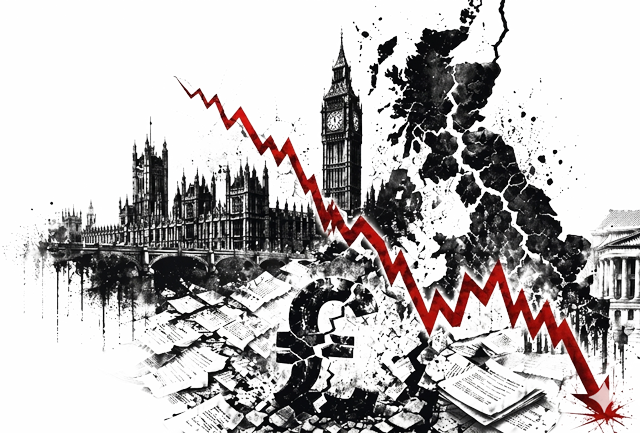
This essay asks whether Britain’s problems have moved beyond the reach of ordinary politics. It tests the post war record against today’s combined pressures: weak GDP per head, poor productivity, ageing, ill health, fiscal lock in and declining state efficiency. Theoretically, Britain can still change direction, but history offers no clean peacetime precedent for reversing this combination within one or two parliaments. The outlook is bleak.
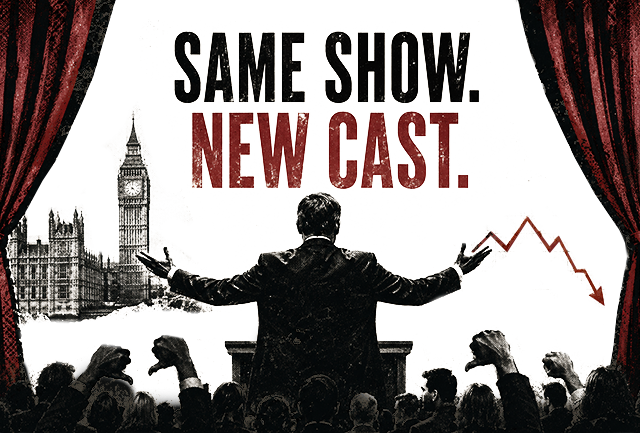
British politics has become a long running theatre in which the cast changes but the plot rarely does. Politicians sell the illusion that they can fix what is broken; voters believe them, boo when promises fail, then return for the sequel. This essay argues that blame cannot stop with politicians. The electorate helps sustain the show by rewarding simple stories, reassuring villains and confident promises, while Britain’s creditors may not remain so patient.
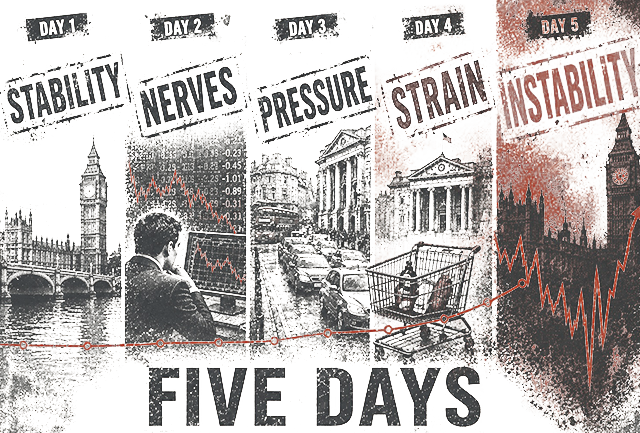
Five Days imagines how Britain’s long decline could become a sudden crisis. A US Iran conflict triggers energy price shocks, sterling weakness and investor flight, but the real vulnerability is domestic: weak growth, fiscal exhaustion, fragile politics and low public trust. Over one week, instability spreads from markets into mortgages, fuel, food, government and daily life. The essay asks what happens when decline stops being manageable and becomes unavoidable