Media
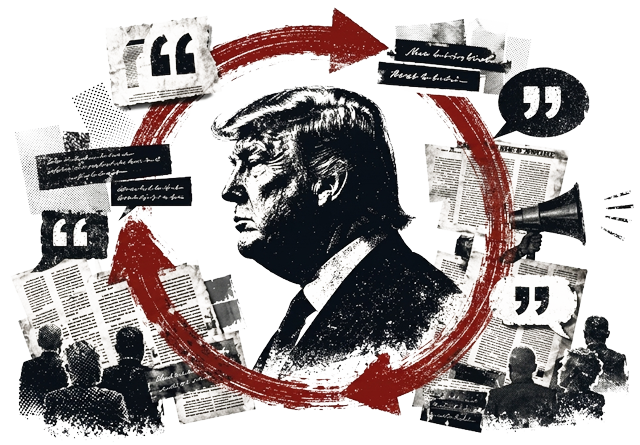
This essay examines how President Trump exposes a recurring weakness in journalism. The issue is not whether he deserves criticism, but why his name so often lowers standards of proof, proportion and restraint. Using journalists’ own words, the essay argues that moral certainty, insinuation and audience prejudice are replacing rational argument, creating a confirmation loop in which journalism returns readers’ own assumptions with added authority
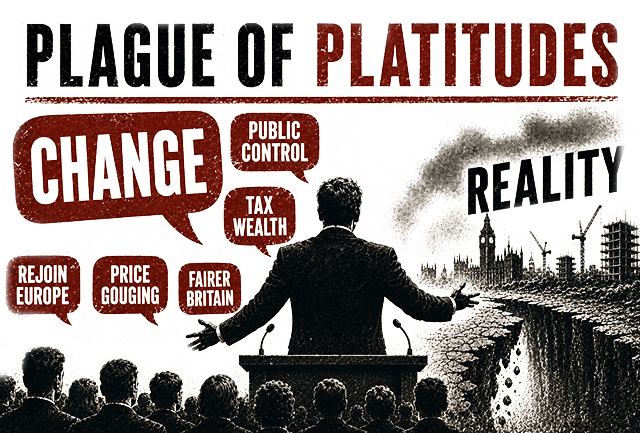
Plague of Platitudes examines how political language in Britain has moved beyond ordinary sloganising into something more damaging: the substitution of phrases for policy. The essay argues that platitudes are not merely tired clichés but words that sound morally or practically complete yet lack mechanisms, costs, resistance, trade offs, and timescales. The examples from the Labour Party’s attempt to replace Keir Starmer show how language replaces policy formulation. The media sits at the centre of the argument because it should test political claims before they become public meaning. When it fails, empty language is mistaken for analysis, policy collapses on contact with reality, and trust drains further away.
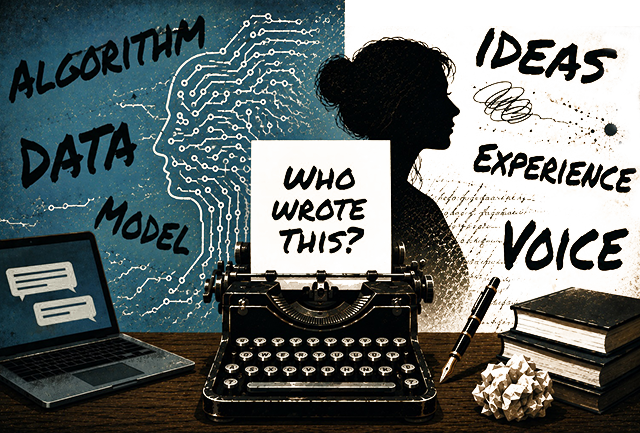
This essay asks what AI has done to authorship in writing and the arts. It argues that the real dispute is not simply whether machines can produce prose, but who gets to claim creative authority when they do. AI exposes anxieties about provenance, trust, labour, originality and status. The problem is not assistance itself, but hidden substitution. The answer is clearer disclosure, process and responsibility, not romantic denial or blanket panic